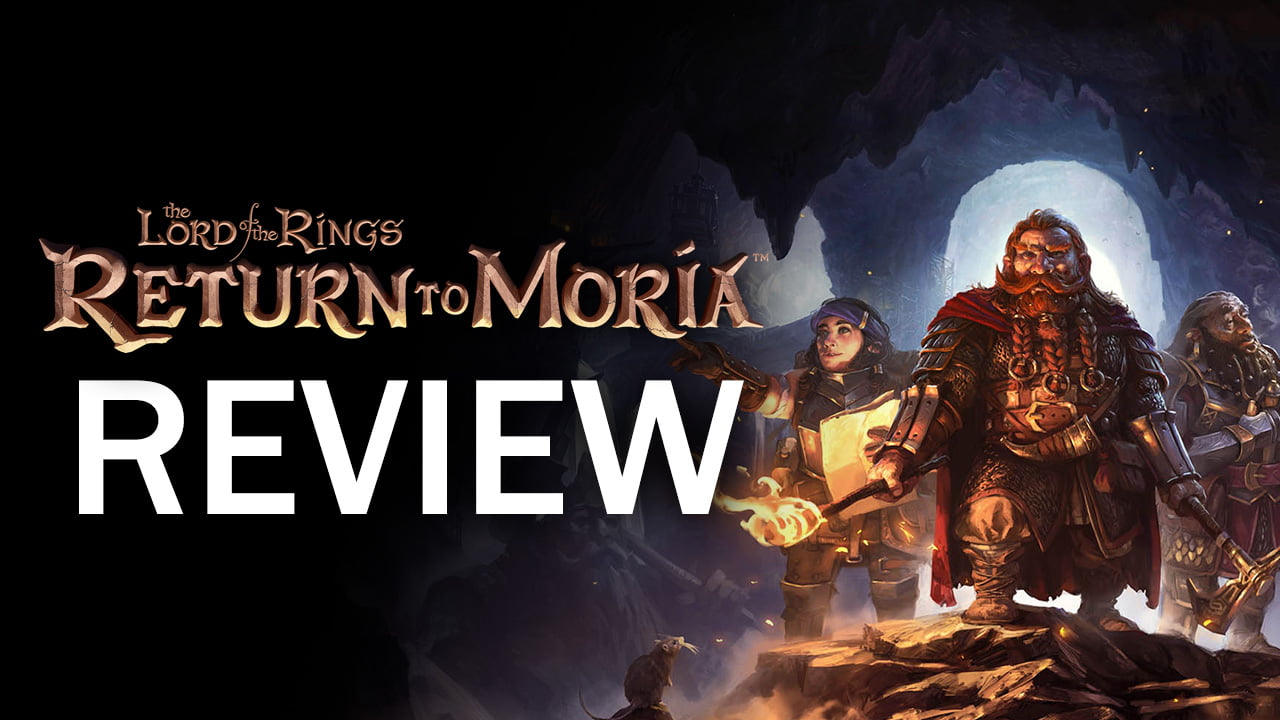
Embark on a daring expedition with The Lord of the Rings: Return to Moria, a game that blends survival and exploration within the mystical realms of Middle-earth. Developed by Free Range Games and North Beach Games, this title is set in the Fourth Age, about fifty years after the events of the Lord of the Rings. It offers a unique blend of survival mechanics, base-building, and combative challenges, all set within the rich lore of J.R.R. Tolkien’s universe. Does this game manage to capture the grandeur of Khazad-dûm, or does it falter in the dark?
Gameplay and Mechanics
Return to Moria is a survival game emphasizing resource gathering, crafting, and base-building amidst the dark, mysterious mines of Moria. After a mining accident separates players from Gimli Lockbearer, they set off on an adventure into the deepest fathoms of Moria. The combat mechanics are a standout feature, requiring strategic maneuvering and a balance of offensive and defensive tactics against orcs, goblins, and other monstrous creatures. As players progress, they face ever larger and more dangerous enemies, including boss battles, ensuring the combat remains challenging and dynamic.
However, the game’s difficulty, especially in single-player mode, can be excessively challenging. The steep learning curve and relentless enemy assaults may deter solo adventurers or those new to survival games with action elements. Additionally, the multiplayer aspect, while offering a richer experience, can sometimes feel disjointed due to the challenges in integrating individual players’ contributions, such as crafting tables and resource heaps.
The game world in Return to Moria uses partial procedural-generation. Meaning that each major area in the game remains the same across playthroughs, yet the arrangement and order that you will encounter them will change. This is a novel concept that works surprisingly well in this game and injects some life into subsequent playthroughs. The game also offers a seamless ‘world-hopping’ feature. This allows players to effortlessly teleport their character between different game instances – be it joining a friend’s adventure or managing multiple personal endeavors.
Visuals and Sound Design
The game brilliantly captures the essence of Tolkien’s Middle-earth, with detailed environments and authentic dwarven architecture. Lighting effects contribute significantly to the immersive experience, creating a sense of depth and mystery as players explore the ancient ruins. The design of the mines, from grand halls to narrow tunnels, reflects the rich history and the epic scale of the dwarven kingdom.
Visually, it is obvious that this game did not set out to redefine the benchmarks of photorealistic graphics. Instead, it carves its own niche with a stylized approach that should gracefully withstand the test of time. The environments and character models are visually appealing in their own right, showcasing a unique charm. However, it’s clear that the developers prioritized artistic expression over raw graphical fidelity. The result is a visually distinct game that stands out for its creative design rather than its technical prowess.
The sound design adds another layer of immersion, with ambient noises and musical scores that enhance the sense of being in a living, breathing world. The occasional dwarven song breaks the monotony of mining and exploration, momentarily warming the cold, dark atmosphere of the mines.
Technical Performance
Despite its strong thematic and atmospheric presentation, Return to Moria is marred by technical issues that range from minor annoyances to significant gameplay disruptions. Players have reported various bugs, inconsistent performance across platforms, and glitches that detract from the gaming experience. These issues indicate a need for further refinement and optimization to realize the game’s full potential. Many of these issues have been patched post-launch, yet a few still persist.
Pros
Richly detailed Middle-earth setting that captures the essence of Tolkien’s world.
Engaging and dynamic combat system with a variety of enemies.
Authentic dwarven architecture and cultural elements.
Multiplayer experience that enhances gameplay dynamics.
Cons
High difficulty level, especially for solo players.
Technical issues that hinder gameplay experience.
Limited environmental interaction and visibility in the mines.
Mechanics such as crafting and resource management need refinement.